


The four categories of AI agent for user acquisition — LLM + MCP, MMP-native, media-native, third-party — what each sees, what it does, and how to choose.
Oct 19, 2026 - 7


An AI agent for user acquisition is software that reads your UA data — ad network delivery, MMP attribution and cohorts, or both — and does some of the work a UA manager does. That might be answering questions, monitoring for problems, recommending changes, or making changes itself. In 2026 the label covers four quite different things:
They differ most in two ways: what data each can see, and whether it waits to be asked or works on its own. Choosing well starts with being clear about both.
In this guide: The four categories · LLM + MCP · MMP-native · Media-native · Third-party · How to choose
Two questions sort every product in this space:
A third question cuts across both: does it act, or advise? Some agents change bids, budgets and creatives; others only recommend. Neither is better in general. It depends on how much you trust the agent's view of your data and how reversible the change is.
What it is: Claude, ChatGPT or another assistant, connected to your accounts through Model Context Protocol (MCP) servers. Meta launched official Meta Ads AI connectors in 2026 that let an assistant read and manage Meta campaigns. Google offers an official Google Ads MCP server that is read-only. MMPs are adding their own.
Strengths: maximum flexibility. You can ask anything, combine sources if you connect several, and get an answer in plain English. For one-off analysis it's hard to beat. Assistants can also run on a schedule now, which closes part of the gap with continuous tools.
Blind spots:
How far you can push it is covered in can Claude + MCP run a nightly UA audit? and Claude + MCP or a specialized AI UA agent?.
What it is: AI built into your attribution platform. AppsFlyer's Agent Hub (in beta at the time of writing) includes agents for daily KPI anomaly detection across partners, campaigns and geos, plus research and summary agents. Adjust's Pulse alerts flag metrics that fall outside a band built from a moving average and standard deviation.
Strengths: they see your attribution data first and best, need no setup beyond what you already have, and are usually bundled with your MMP plan.
Blind spots:
See PvX Delta vs AppsFlyer Agent Hub.
What it is: the automation inside the ad networks themselves. Meta's Advantage+ app campaigns and Google App Campaigns hand targeting, bidding and creative combination to the platform's own models. Recommendation tabs suggest further changes.
Strengths: the best possible view of the network's own delivery, and the ability to act on it in real time. For many app advertisers, this is where most of the "AI" in their UA already lives.
Blind spots:
It optimizes inside one network; it can't tell you to move budget to another. See PvX Delta vs Meta and Google recommendations.
What it is: independent products that sit on top of your data. This category is the most varied:
Strengths: independent of any one network or MMP, and often cross-source by design.
Blind spots: they vary too much to generalize. Read each one's data sources and actions carefully. Watch in particular whether it reads your MMP's cohorts or only network-reported conversions. Many tools built for eCommerce stop at CPA and in-platform ROAS.
Work through these in order:
Most teams end up with more than one: the network's own automation for delivery, an assistant for questions, and a continuous audit for coverage. The distinction between a copilot that helps you work and an autopilot that works for you is drawn more sharply in UA copilot vs UA autopilot. A wider map of how marketers use AI across UA is in how marketers are using AI for mobile user acquisition. If the category you want is the last one, what is an autonomous UA audit? defines it.
See what a continuous, cross-source audit finds in your account.
PvX Delta is free and read-only.
Oct 19, 2026 - 7 minutes
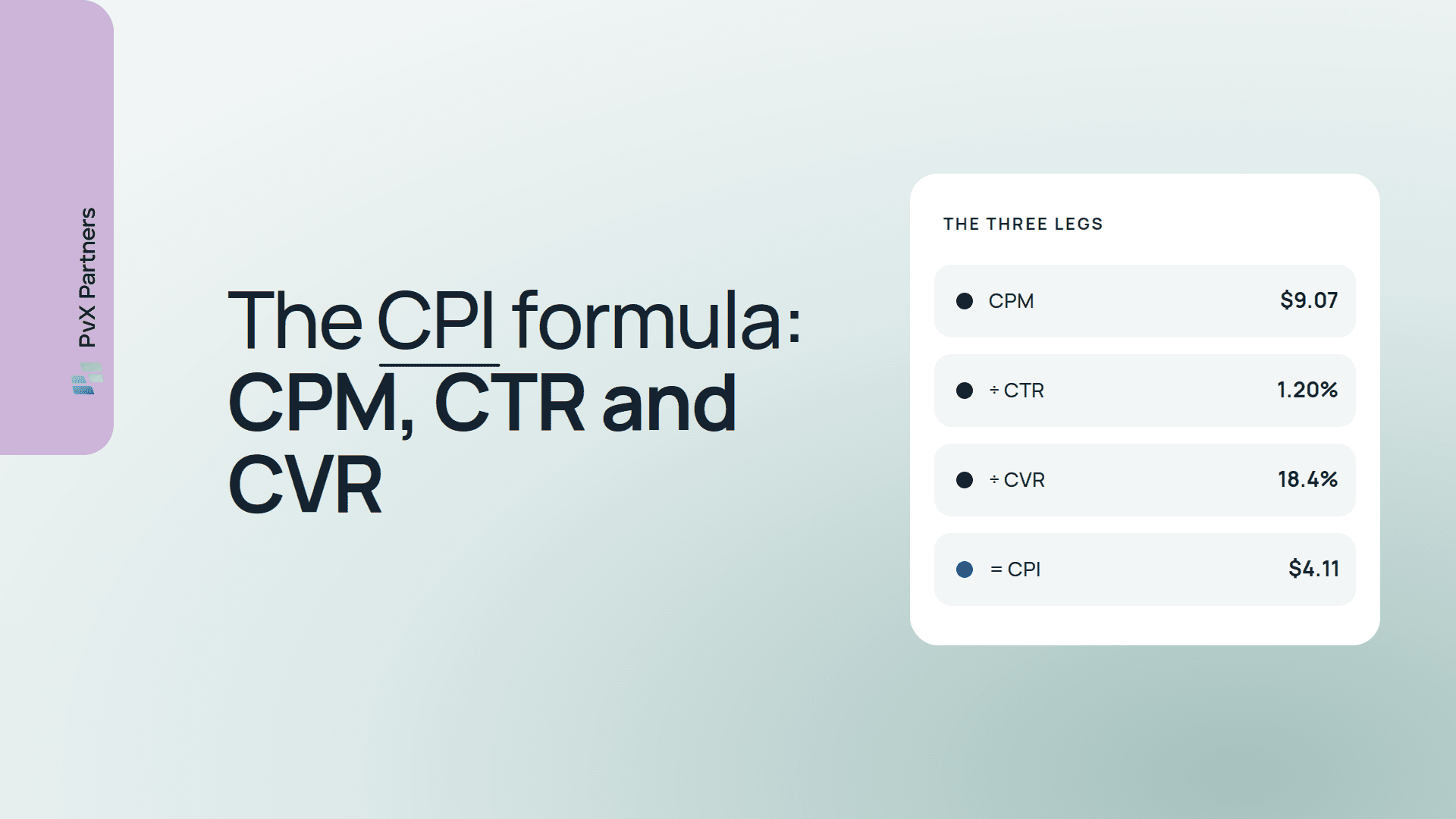
Oct 16, 2026 - 10 minutes
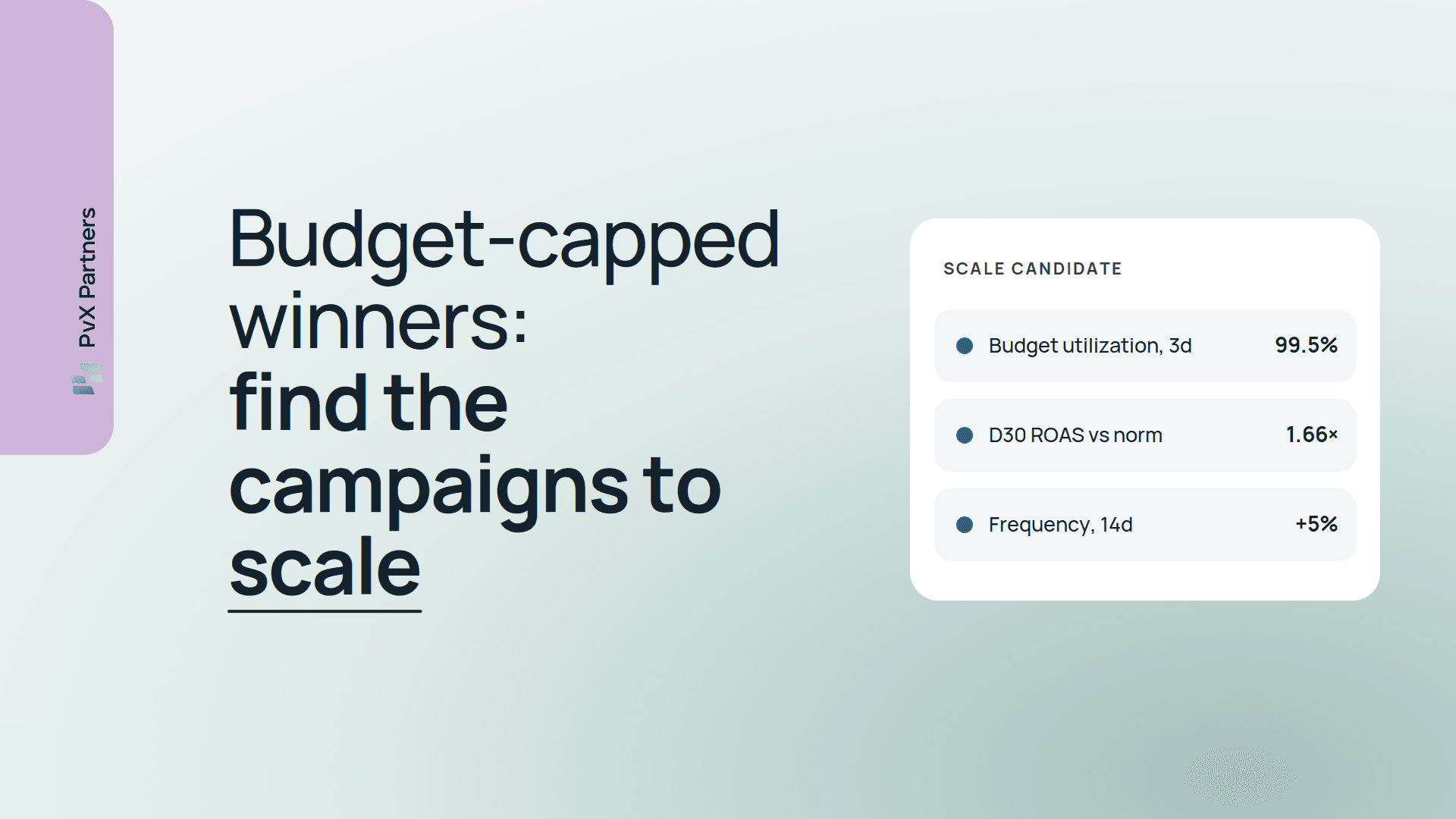
Oct 16, 2026 - 15 minutes
Some of the fastest growing businesses in the industry